

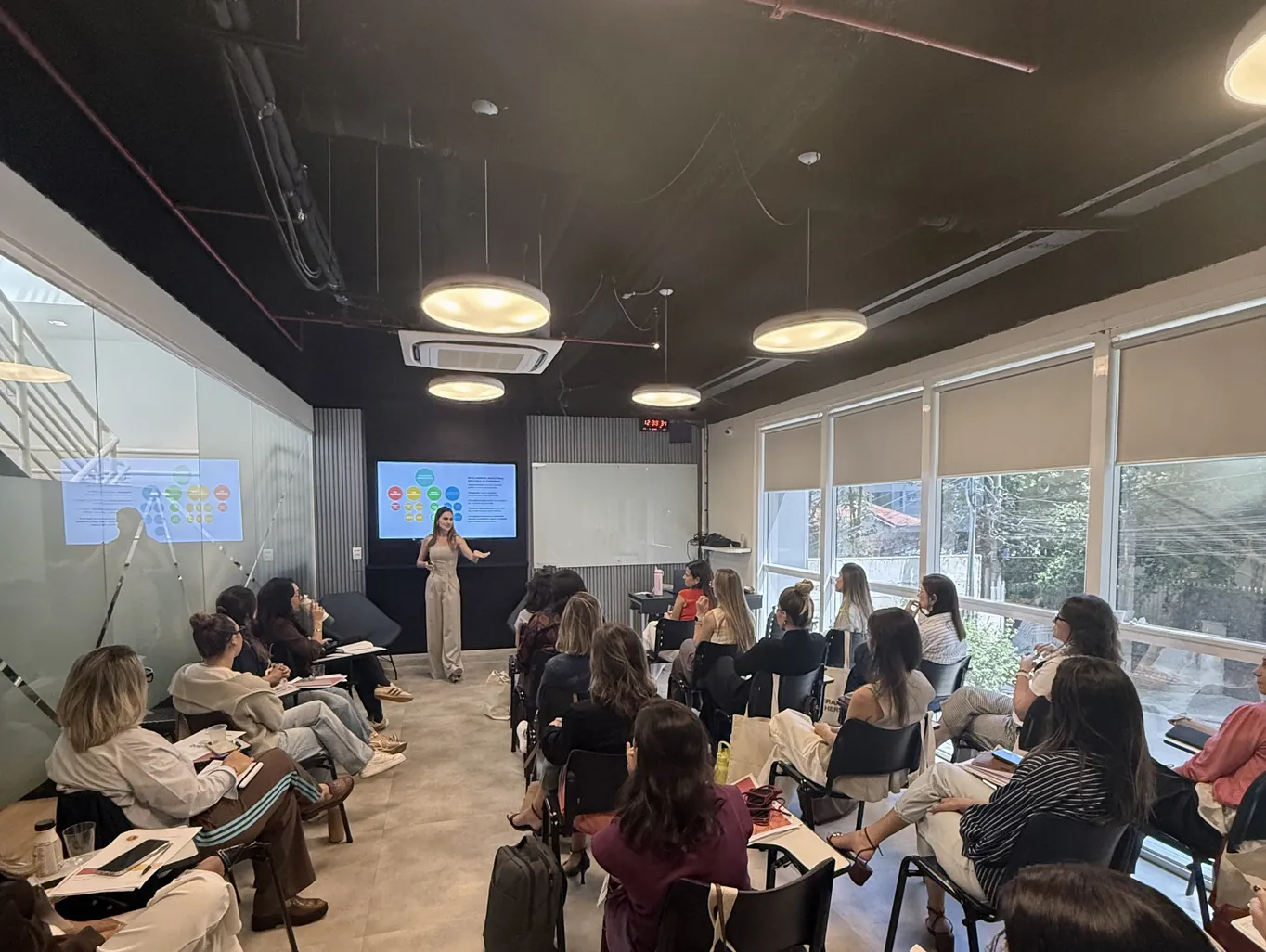
Between 19 August and 3 September 2026, I heard from 68 women in my professional network, built predominantly through relationships cultivated over the course of my career. Forty-nine (72.1%) held senior management, director, vice-president or C-suite positions, or were partners or entrepreneurs; 14 were managers and five held other roles, including coordination, supervision and legal practice. This was a purposive, non-probability sample. The study reflects the perceptions of this group and does not seek to represent all Brazilian women executives. The questionnaire did not collect information on industry sector.
Relational capabilities were rated as important across all the dimensions assessed:
The lowest proportion, although still high, concerned influencing without formal authority: 55 of the 68 participants (80.9%) gave this capability a score of 4 or 5. The questions measured perceived importance, not proficiency. Nevertheless, the result prompts a question: how do professionals understand influence when it depends less on their position and more on their ability to mobilise others?
The question of what it means to “be political” also elicited different interpretations. “Building relationships” appeared in 39 responses; “knowing how to play the game” in 32; and “understanding how decisions are made” and “navigating interests” in 31 each. Only seven chose “engaging in politicking”, three selected “giving up authenticity”, two “flattering key people”, and one “manipulating situations”. Respondents could select up to three options, although 12 exceeded this limit. When considering only the 56 responses that complied with the instruction, the ranking of the most frequently selected options remains unchanged: relationships (28), playing the game and understanding decisions (23 each), and navigating interests (21).
When the question shifted from definitions to difficulties experienced, the picture became more challenging. In addition to the 49 who selected power games, 18 identified developing sponsorship relationships; 17, gaining visibility and recognition; 14, interpreting informal codes; and 12 each, accessing decision-makers or building alliances. Each participant could select up to three challenges.
identified dealing with power games as one of their main professional challenges
There is another important distinction: 36 women (52.9%) regarded politics as a natural part of senior roles. Among the remaining 32 were women who acknowledged its importance but felt uncomfortable with it, others who associated it with strain, and others who would have preferred their results alone to be sufficient. In this second group, 29 (90.6%) selected difficulty dealing with power games, compared with 20 of the 36 (55.6%) who regarded politics as natural. The contrast suggests an association between how politics is interpreted and the difficulties reported, without establishing what causes it.
The contrast suggests an association between how politics is interpreted and the difficulties reported, without establishing what causes it.
Seniority, however, does not remove the issue: 35 of the 49 professionals in the senior group (71.4%) and 14 of the other 19 (73.7%) selected power games. The similarity between these proportions is relevant to a study of career progression. The challenge is present even among professionals who have already reached positions of greater responsibility.
The perceived cost of visibility emerged in another question. Of the 36 participants (52.9%) who said they had avoided speaking up, seeking visibility or building support at least sometimes, 29 selected “sometimes” and seven selected “frequently” or “very often”. Another 24 answered “rarely”, six “never”, and two responses were ambiguous. Hesitation occurs at different levels of intensity. It was also reported by 18 of the 36 women (50%) who saw politics as natural and 18 of the other 32 (56.3%). Perceptions of politics alone do not explain this behaviour.
said they had avoided speaking up, seeking visibility or building support at least sometimes
Hesitation occurs at different levels of intensity.
The open-ended responses help explain why. One participant wrote: “Being involved in, or included in, discussions at more senior levels is much more complex than leading initiatives and people further down the organisation.” Another stated: “Technical competence is not enough; it is also necessary to build visibility and a professional network, and have sponsors who will advocate for me in decision-making forums.”
Both comments point to the difference between managing one's own responsibilities well and gaining meaningful access to the forums where priorities, resources and opportunities are decided. In practice, a professional may lead a high-performing team, have satisfied clients and enjoy a strong technical reputation without participating in the conversations that shape her future in the organisation.